 HongYang Tech
Email Scam: Relief 4.0 Program
We received a phishing email impersonating the Relief 4.0 program. It repeats material from the original program, which could fool people familiar with it. We shared this alert to help readers warn friends and family.
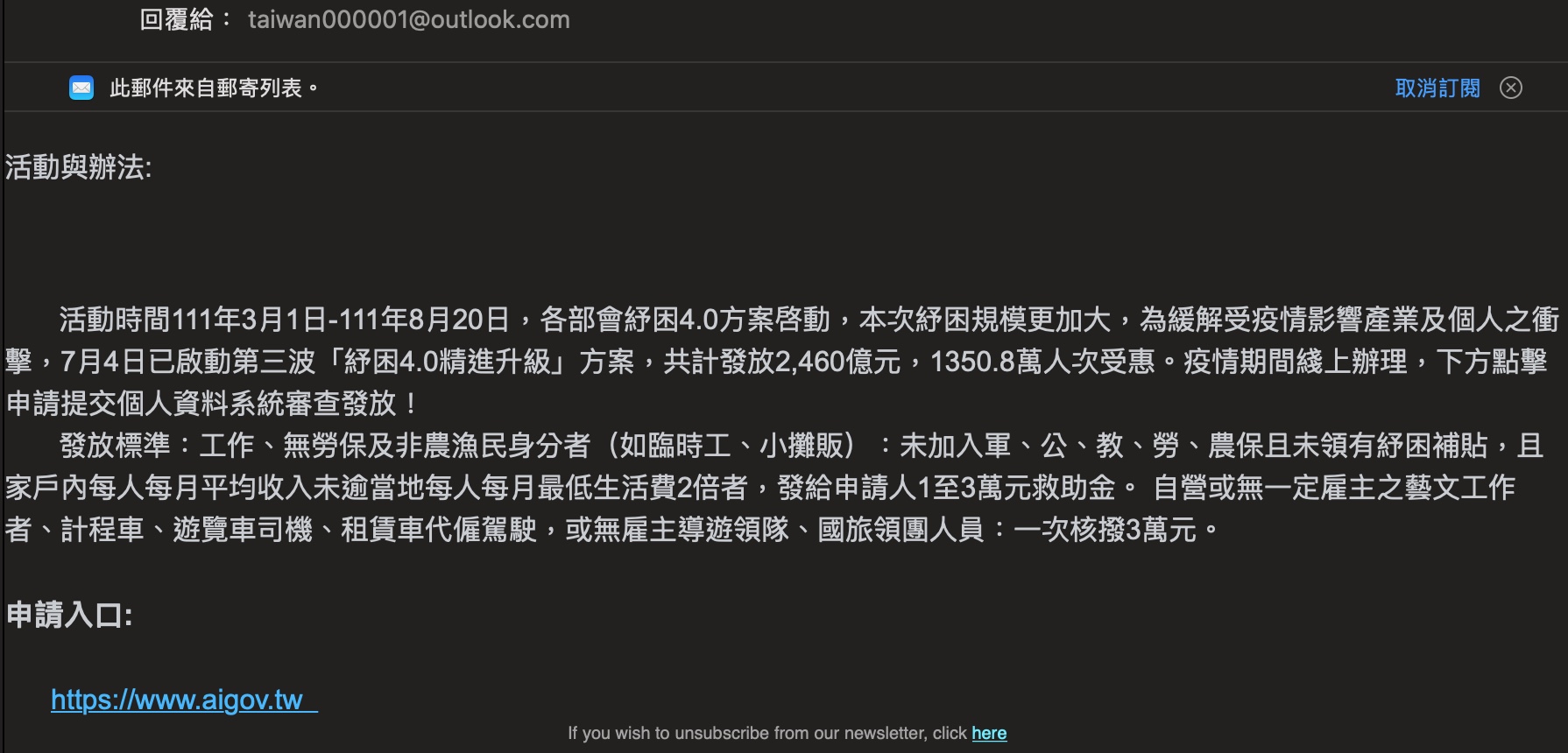
The fraudulent email read:
The email claimed that the program ran from March 1 to August 20, 2022, with a third round starting July 4. It cited NT$246 billion in relief and 13.508 million beneficiaries and urged readers to submit personal details through an online application.
The email claimed NT$10,000–30,000 for eligible workers without military, civil service, education, labor or agricultural insurance or a prior subsidy, with monthly household income per person capped at twice the local minimum living cost. It also claimed NT$30,000 for eligible self-employed arts workers, drivers, guides and tour leaders.
The email then gave an application address.
Application address:
https://www.aigov.tw
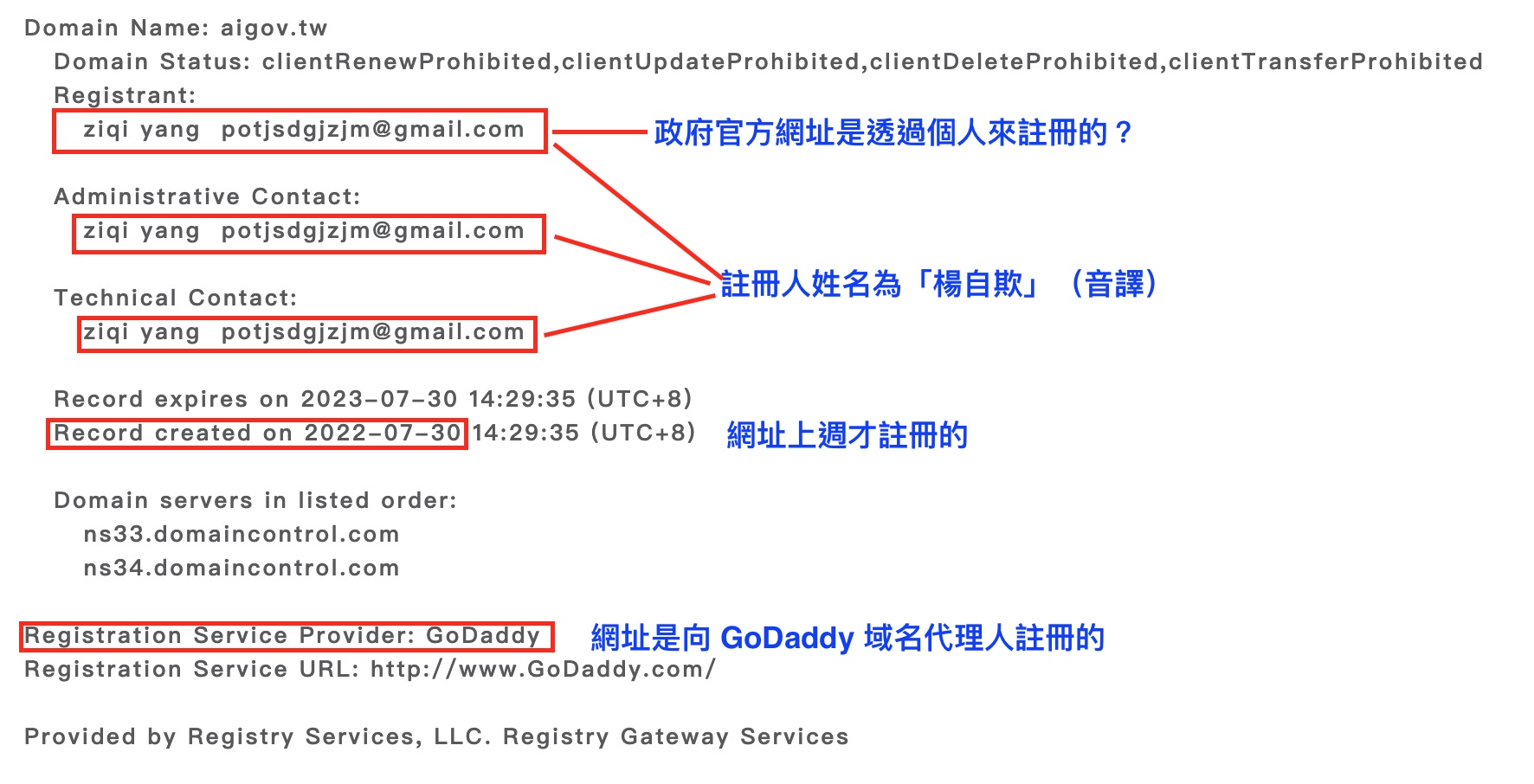
A lookalike domain can indicate impersonation. Taiwanese government web addresses normally use gov , but the domain given in the email used aigov. The screenshot shows the results of a closer check.
The fake website looked convincing and even showed an unread message prompt.
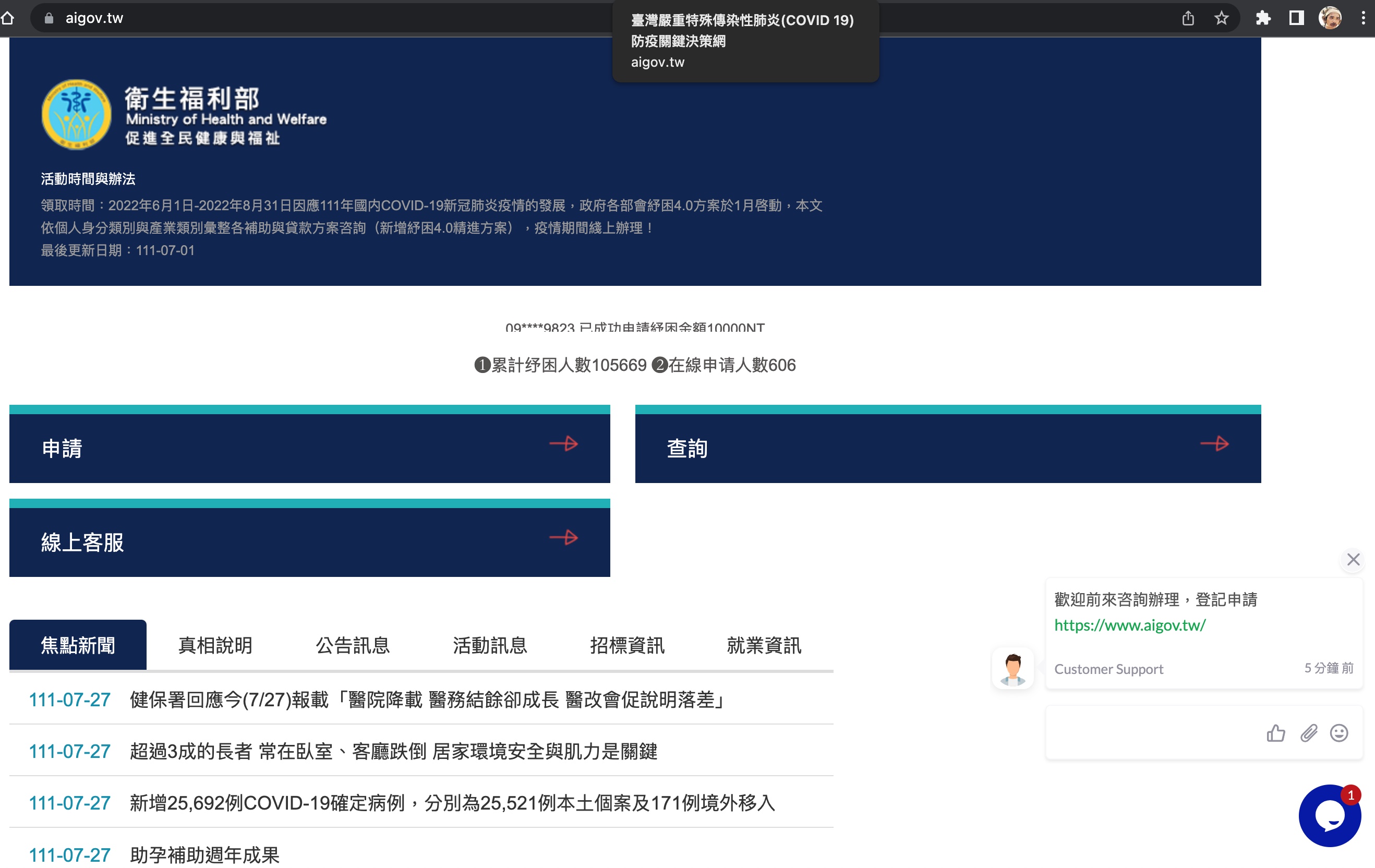
The fake health ministry site offered three options: apply, check status and contact online support.
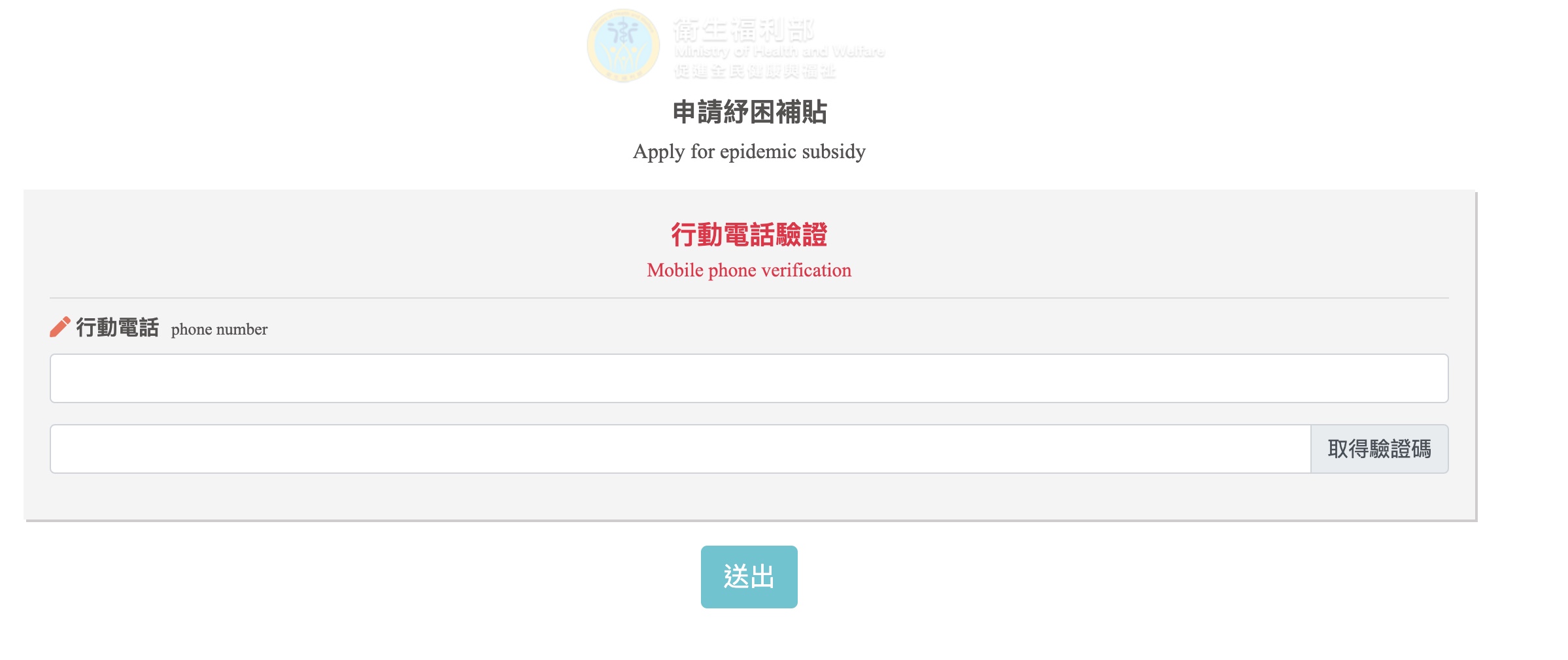
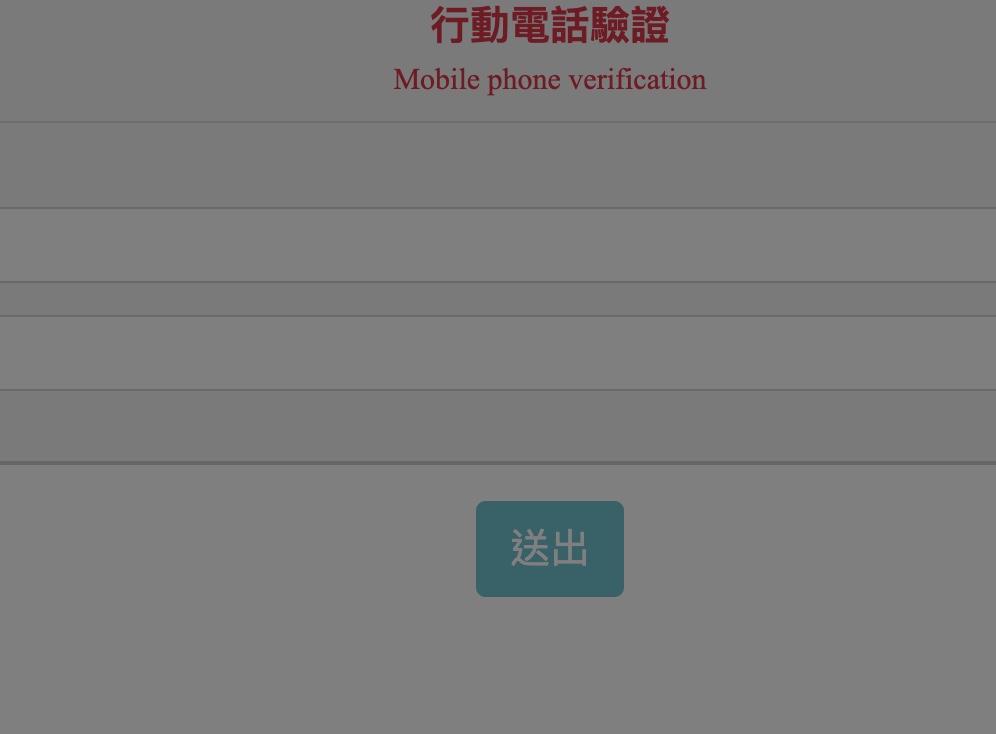
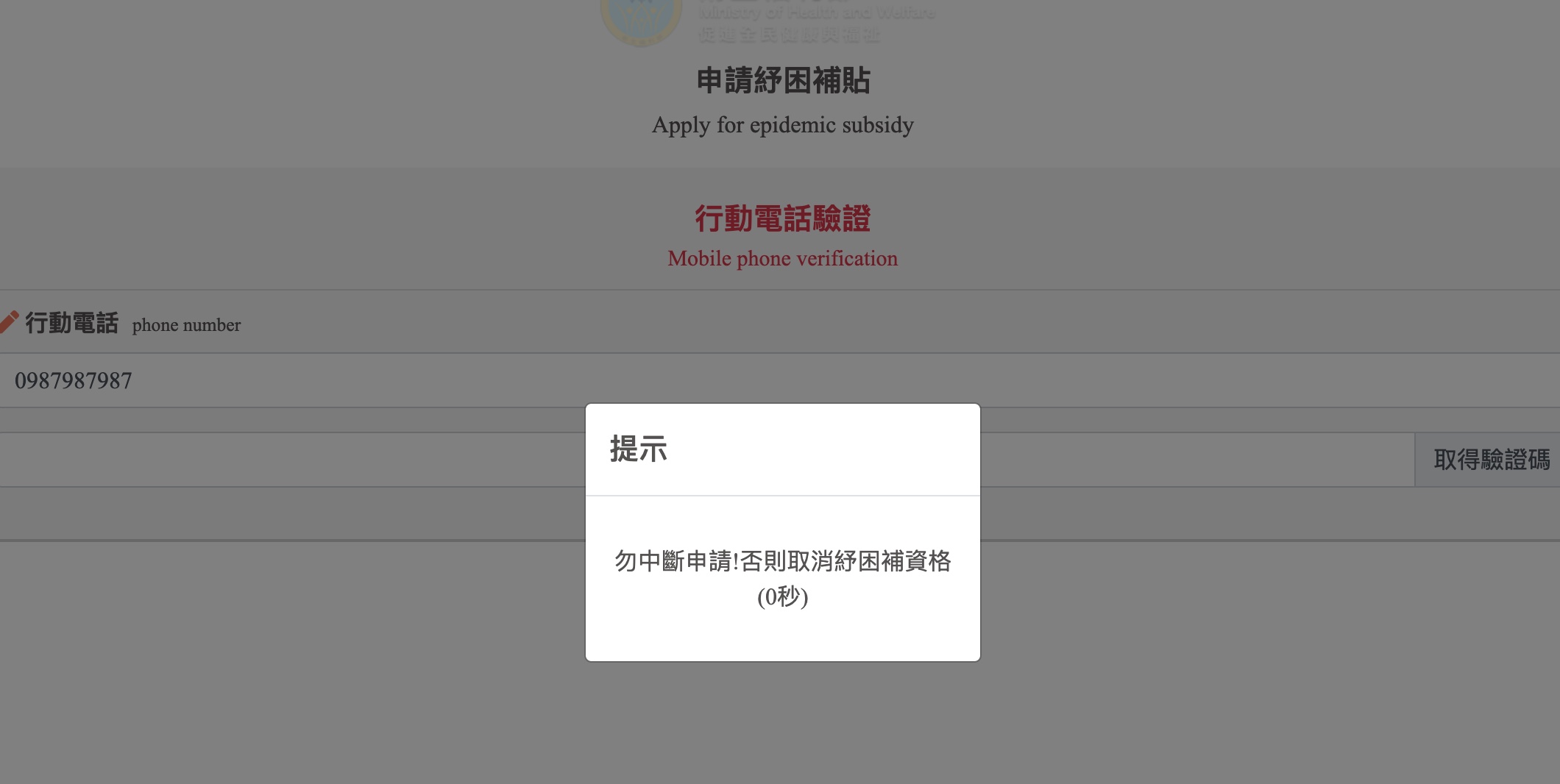
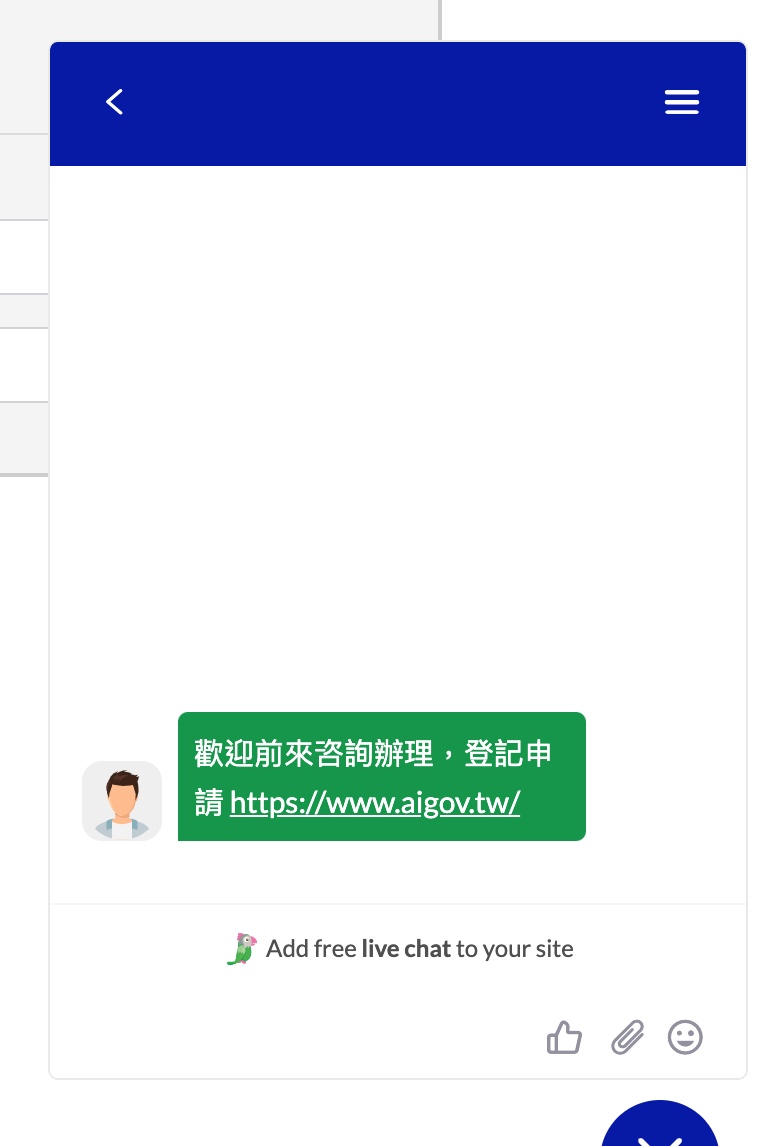
The status page used the simplified character for “failed,” a clue that the page differed from the Taiwanese site it imitated.
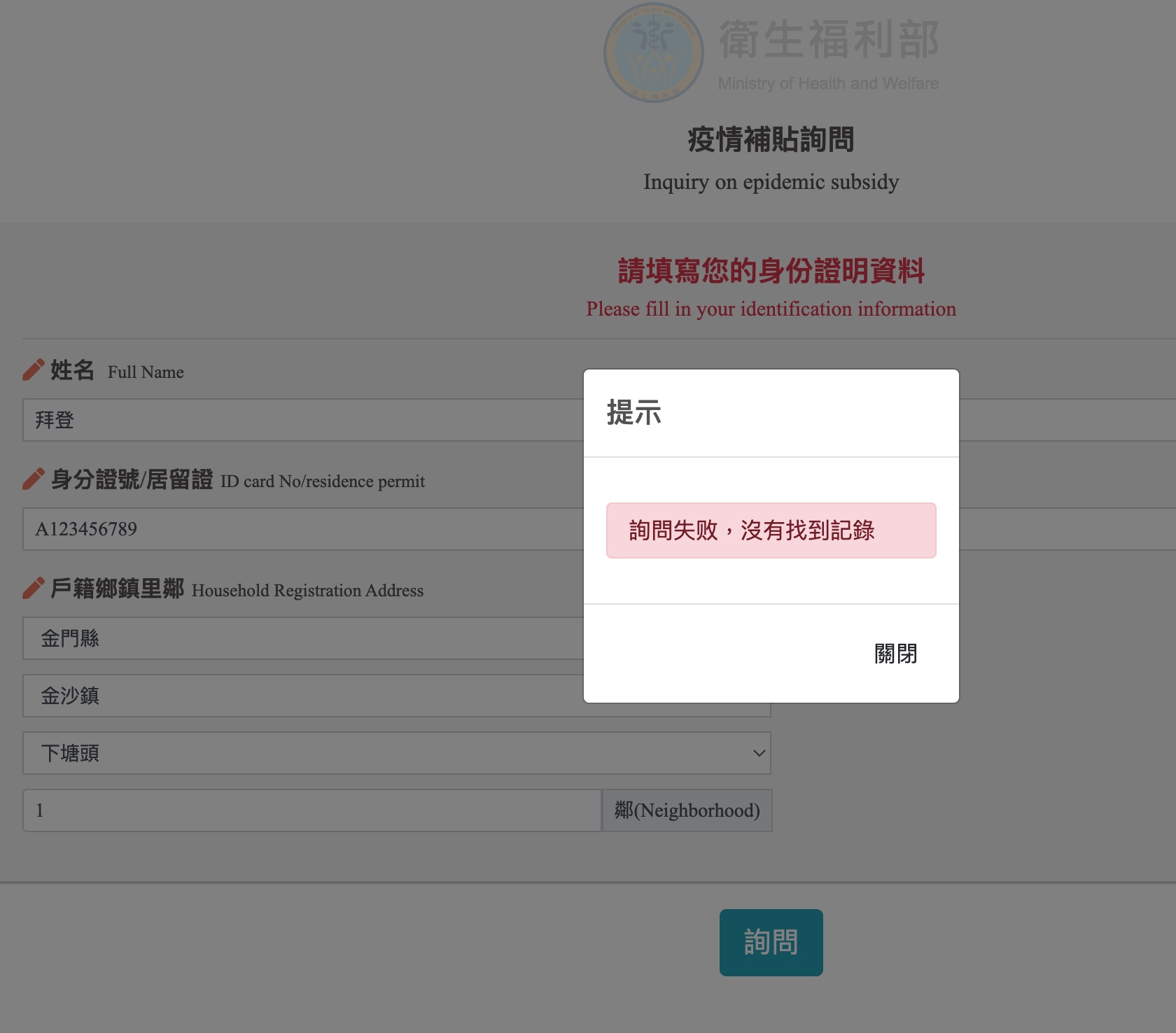
The sequence funnels visitors from the application to a failed lookup and then to fake support. The supposed agent can use this interaction to persuade victims to operate an ATM with their bank card.